Best Building Materials for Homes: A Practical Comparison
Picking the right materials shapes how your custom Hudson Valley home looks, performs, and holds up over time. This guide walks homeowners and builders through the practical trade-offs — durability, curb appeal, energy performance, and cost — for common systems like wood, steel, concrete, brick, and stone, plus greener options such as hempcrete and CLT. We focus on lifecycle cost and energy efficiency so you can match materials to your priorities, timeline, and budget — and avoid costly surprises while improving resilience and resale value.
Why Material Choices Matter for Your Dream Home
The materials you choose set your upfront cost, long-term durability, energy use, and curb appeal. Each option brings a distinct mix of structural behavior, thermal performance, maintenance needs, and visual character. Thoughtful choices reduce repairs, lower heating and cooling bills, and help realize your architectural vision. In the Hudson Valley, materials also need to tolerate seasonal humidity, freeze‑thaw cycles, and local code requirements. Considering these trade-offs early makes your budget and schedule far more predictable.
Troy Construction Company, Inc., a Hudson Valley custom home builder, provides material-selection consultations tailored to your site and design goals — ensuring each choice is buildable and budget‑aligned.
Impact of Building Materials on Cost, Durability, and Energy Efficiency
Materials drive initial budgets, long-term durability, and the home’s ongoing energy needs. Properties such as mass, thermal resistance, and moisture tolerance affect construction complexity, expected service life, and heating/cooling demand. Heavy materials like stone and concrete add thermal mass; well‑insulated walls cut heating loads. Durability influences maintenance cycles and insurance. Knowing typical lifespans and thermal performance helps you invest where returns come in the form of fewer repairs and lower energy bills.
Major cost drivers are labor, local availability, and specialty trades. Spending more up front on insulation and high‑performance windows often pays back within roughly ten years. Use this quick checklist when choosing materials:
Key Factors for Material Selection
Material selection balances budget, climate fit, schedule, aesthetics, sustainability, and ongoing maintenance. Pick one or two priorities to simplify decisions: budget‑driven owners often choose conventional wood framing; sustainability‑focused owners may pursue CLT or hempcrete. Early code review matters for novel systems. Long-term, low‑maintenance, energy‑efficient materials improve comfort and resale value.
Budget Priority: Define firm limits before specifying materials.
Performance Priority: Rank energy efficiency, fire/moisture resistance, and expected lifespan.
Aesthetic Priority: Choose the architectural style and compatible cladding.
Sustainability Priority: Set targets for embodied carbon and reclaimed content.
Wood vs. Steel Framing for Hudson Valley Homes
Wood and steel framing differ in strength‑to‑weight, fire behavior, thermal bridging, build pace, and design flexibility. Wood is cost‑effective, easy to modify on site, and integrates well with insulation. Steel delivers higher strength and longer clear spans and can be prefabricated, but it needs thermal‑break details. Those differences affect schedule, required trades, and how well each system supports open‑plan layouts.
| Material | Attribute | Practical Impact |
|---|---|---|
| Wood | Strength & Insulation | Cost-effective, straightforward to insulate, suited to typical residential spans |
| Steel | Fire Resistance & Design Flexibility | Enables long spans and slender profiles; higher material cost and requires thermal-bridge solutions |
| Wood/Steel | Build Time & Labor | Wood often faster with local crews; steel can accelerate schedules when prefabricated but needs specialist installers |
Wood Framing: Pros and Cons
Wood framing is widely used because of local labor availability, cost advantages, and good thermal performance when paired with modern insulation. It’s forgiving for late changes. Trade‑offs include sensitivity to moisture, rot, and pests, plus lower inherent fire resistance. Engineered or sustainably sourced lumber can improve consistency and environmental impact. For many Hudson Valley projects, wood offers a practical balance of affordability and performance within a well‑controlled building envelope.
Steel Framing: Strength and Design Flexibility
Steel’s high strength‑to‑weight ratio lets you span large distances, use slimmer structural members, and achieve minimalist interiors. It’s non‑combustible, resists rot and insects, and recycled content lowers embodied energy. Drawbacks are the need for thermal breaks, corrosion protection, and skilled trades. Steel shines in contemporary designs with large glazing runs or when prefab components shorten the schedule.
Concrete, Brick, and Stone for Durable Homes
Concrete, brick, and stone deliver long service lives, strong weather and fire resistance, and a sense of permanence — appealing to owners who want low maintenance and classic curb appeal. Concrete foundations and insulated concrete forms (ICFs) offer structure, airtightness, and insulation. Brick and stone veneers provide durable exteriors that age gracefully and contribute thermal mass to stabilize interior temperatures. Locally, masonry systems also help resist wind‑driven heat loss and storm damage.
Brick and Stone for Classic Appeal and Longevity
Brick and stone veneers last for decades with minimal upkeep and lend a timeless look that enhances curb appeal. Using locally sourced stone lowers transport impacts. Skilled masonry labor increases initial cost, but properly installed masonry stands for generations. For a low‑maintenance exterior and a heritage aesthetic, brick and stone remain excellent choices alongside modern insulated backup walls.
Foundations and Basements: Concrete and ICFs for moisture control and insulation.
Exterior Veneers: Brick or stone for durable, low‑maintenance facades.
Thermal Mass Applications: Interior concrete or stone to moderate temperature swings.
Sustainable Building Materials for Eco-Friendly Homes
Materials like hempcrete, cross‑laminated timber (CLT), recycled steel, and low‑carbon concrete can lower embodied carbon, improve indoor air quality, and even sequester carbon. Hempcrete insulates while storing carbon; CLT locks biogenic carbon and supports fast prefabrication; recycled steel reduces embodied energy. Practicality in the Hudson Valley depends on supply chains, contractor experience, and code approval.
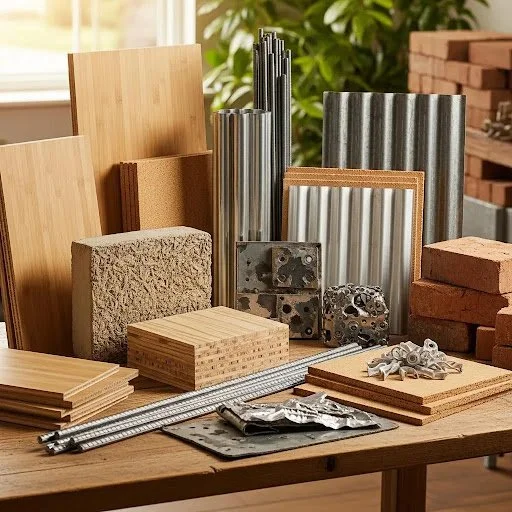
Materials like hempcrete, cross‑laminated timber (CLT), recycled steel, and low‑carbon concrete can lower embodied carbon, improve indoor air quality, and even sequester carbon. Hempcrete insulates while storing carbon; CLT locks biogenic carbon and supports fast prefabrication; recycled steel reduces embodied energy. Practicality in the Hudson Valley depends on supply chains, contractor experience, and code approval.
| Sustainable Material | Sustainability Metric | Suitable Use Cases |
|---|---|---|
| Hempcrete | Carbon sequestration & breathable insulation | Non-load-bearing infill, insulating panels |
| CLT (Cross-Laminated Timber) | Biogenic carbon storage & prefab efficiency | Load-bearing floors/walls for mass timber homes |
| Recycled Steel | High recycled content & lower embodied energy | Structural framing for long spans or high-strength needs |
Hempcrete and Cross‑Laminated Timber Benefits
Hempcrete is a breathable bio‑composite that offers insulation, moisture buffering, and carbon sequestration, typically used as non‑load‑bearing infill. CLT is an engineered mass‑timber panel that provides structural strength, rapid prefab installation, and meaningful carbon storage. Both lower a home’s carbon footprint but require early planning, specialized crews, and code confirmation.
Recycled Steel and Other Green Materials
Recycled steel cuts embodied energy and remains recyclable at end of life. Reclaimed wood, low‑VOC finishes, and other low‑impact materials reduce resource extraction and improve indoor air quality. Comparing embodied energy and recycled content helps focus on the materials that deliver the largest lifecycle benefits. Often a hybrid approach balances performance, cost, and sustainability.
Balancing Cost-Effectiveness and Quality
Balancing cost and quality means weighing upfront material and labor costs against long‑term maintenance, energy savings, and resale value. Value engineering can replace expensive items with alternatives that preserve durability and appearance. Incentives for energy upgrades also make higher initial investments sensible. A simple framework — evaluate upfront cost, maintenance, energy performance, and resale impact — clarifies where to spend.
| Sustainable Material | Sustainability Metric | Suitable Use Cases |
|---|---|---|
| Hempcrete | Carbon sequestration & breathable insulation | Non-load-bearing infill, insulating panels |
| CLT (Cross-Laminated Timber) | Biogenic carbon storage & prefab efficiency | Load-bearing floors/walls for mass timber homes |
| Recycled Steel | High recycled content & lower embodied energy | Structural framing for long spans or high-strength needs |
Spending on insulation and durable assemblies usually lowers lifetime costs. Use this checklist to prioritize investments:
Invest in the Building Envelope: Insulation, airtightness, and quality windows deliver the biggest energy returns.
Choose Durable Exteriors: Pay more where maintenance is difficult or costly.
Select Structural Materials for Longevity: Balance upfront cost against expected maintenance and resilience.
Troy Construction Company’s value‑engineering process helps clients set performance priorities, compare material scenarios, and plan phased upgrades that fit both budget and long‑term goals.
Material Selection: Maintenance and Energy Savings
Materials determine maintenance rhythms and energy use. Over 5–10 years, siding, roofing, and mechanical systems drive most upkeep; over 20–30 years, structural elements and window replacements are typical. Energy savings from improved insulation and airtightness compound year after year, substantially reducing total energy spend. Homeowners who prioritize a high‑performance envelope and durable exteriors face fewer repairs and enjoy steadier comfort and predictable costs.
5–10 years: Routine exterior and mechanical upkeep; minor repairs.
20–30 years: Possible cladding refresh, window replacement, or major system upgrades.
Energy savings from better insulation and airtightness compound over time.
Emerging Trends in Building Materials
After 2025, trends center on prefabrication, 3D printing, low‑carbon materials, biophilic finishes, and resilience‑focused assemblies. These approaches aim to reduce waste, shorten schedules, and lower embodied carbon while improving occupant wellbeing. Panelized and prefab systems tighten quality control and speed assembly. 3D printing is promising for custom components. Mass timber and low‑carbon concretes are moving into mainstream use. Resilience measures — elevated foundations, flood‑resistant materials — are increasingly common in regional planning. Knowing which innovations are production‑ready lets homeowners adopt reliable improvements without added risk.
Prefabrication and 3D Printing in Home Construction
Prefabrication and panelized construction shorten on‑site time, reduce waste, and improve quality by shifting work to controlled factory environments. They work well for walls, roof trusses, and CLT panels. 3D printing is emerging for customized foundations and components, offering material optimization and design freedom, though code acceptance and contractor experience are still evolving. For Hudson Valley projects, selective prefabrication combined with local trades balances speed with customization.
Energy Efficiency and Disaster Resilience in Material Innovation
Energy efficiency and resilience are central to material innovation as buyers expect homes that use less energy and stand up to extreme weather. Resilient materials — masonry/concrete foundations, steel or CLT with improved fire measures, and high‑performance insulation — raise safety and comfort. Innovations that pair low embodied carbon with high durability, like low‑carbon concrete or engineered mass timber, deliver clear lifecycle advantages. Integrated solutions give the best mix of energy performance and disaster resistance.
Troy Construction’s Personalized Approach
Troy Construction Company, Inc. offers hands‑on material selection services for Hudson Valley clients, weighing durability, energy performance, and aesthetics against site and permitting realities. Our process includes on‑site assessments, cost comparisons, and tailored recommendations so you can prioritize investments with measurable lifecycle benefits. Contact Troy Construction for a material selection consultation and make confident, cost‑effective choices for your custom home.
Frequently Asked Questions
What are the most sustainable building materials for eco-friendly homes?
Hempcrete, CLT, and recycled steel are strong sustainability options. Hempcrete sequesters carbon while providing insulation; CLT stores biogenic carbon and supports fast prefab; recycled steel lowers embodied energy. Local availability and contractor experience are the practical restraints to consider.
How can homeowners ensure their material choices are cost-effective in the long run?
Consider lifecycle costs: combine upfront price with projected maintenance, energy savings, and resale value. Investing in a high‑performance envelope — insulation, airtightness, and quality windows — typically pays back through lower energy bills. Also explore incentives or financing for energy upgrades.
What role does local climate play in material selection for homes?
Climate shapes durability and performance. In the Hudson Valley, account for seasonal humidity, snow loads, and freeze‑thaw cycles. Choosing climate‑appropriate assemblies reduces maintenance, improves comfort, and extends service life.
How do building materials impact a home's resale value?
Materials influence resale through durability, curb appeal, and energy performance. High‑quality, low‑maintenance exteriors and efficient envelopes attract buyers. Sustainable materials can add appeal for eco‑minded purchasers. Thoughtful choices help preserve or increase property value.
What are the maintenance considerations for different building materials?
Maintenance varies by material: wood needs moisture management; brick and stone are low‑maintenance but may need repointing; concrete requires crack and drainage checks; steel needs thermal‑break detailing and corrosion protection. Factor these into lifecycle planning.
What are the benefits of using prefabricated materials in home construction?
Prefabrication reduces on‑site time, improves quality control, and cuts waste by building components in factories. It delivers tighter tolerances and faster assembly for walls, trusses, and CLT panels, and supports sustainability goals by reducing site waste.
Conclusion
The right materials are foundational to a durable, energy‑efficient, and attractive home. Understanding trade‑offs helps you make choices that improve comfort, reduce maintenance, and protect resale value. Working with an experienced builder like Troy Construction connects design intent to buildability and budget. Begin with a material selection consultation to make confident, cost‑effective decisions for your dream home.