How to Build a True Four-Season Outdoor Living Space in Hudson Valey New York
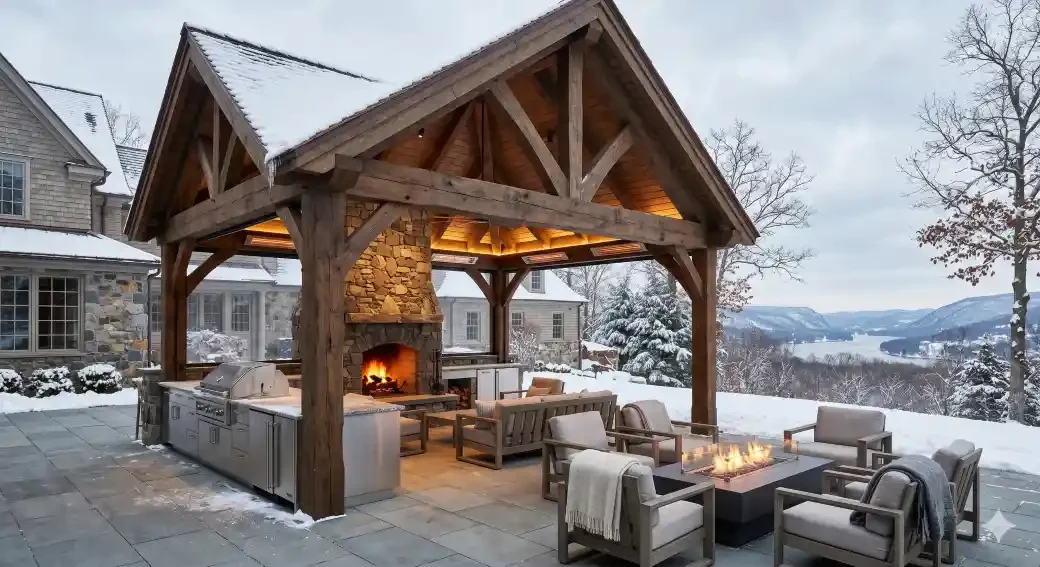
For a long time, the prevailing wisdom for homeowners in the Mid-Hudson Valley, New York was that outdoor living spaces had a strict expiration date. Once the October frost rolled across the Hudson Valley and the first snow hit the Catskills, patios, decks, and outdoor kitchens were effectively locked down until May.
But over the last few years, the way we design high-end estates has completely shifted. Homeowners are no longer settling for seasonal limitations. They want a seamless flow between their indoor comfort and their outdoor environment all 12 months of the year.
Creating a true four-season outdoor living space in our region isn't just about throwing down a few space heaters or adding a pop-up gazebo. It requires deliberate architectural design, structural engineering that respects New York winters, and materials that can withstand severe freeze-thaw cycles. Here is how to approach building an outdoor oasis that thrives in every season.
1. Structural Framing: Building Beyond the Snow Load Line
In Upstate New York, winter engineering dictates everything. The mid-to-upper Hudson Valley frequently experiences heavy, wet snow accumulations that can place thousands of pounds of stress on overhead structures.
If you are planning a covered patio or a timber-frame pavilion, standard construction methods won't cut it. The roof truss systems must be custom engineered to meet or exceed local municipal snow load requirements, which vary significantly from Westchester up to Ulster County. Furthermore, a true four-season space requires foundations and support posts anchored deep below the 42-inch frost line. This prevents the intense winter ground expansion, known as frost heave, from shifting or cracking your beautiful stone masonry and structural framing.
2. Thermal Zoning: Infrared, Fire, and Wind Blocking
To make an outdoor space genuinely usable when the temperature drops into the twenties, you have to manage the microclimate. We approach this using three specific layers of thermal defense:
First, forget standard propane umbrella heaters—they just warm the air, which quickly blows away. Instead, flush-mount commercial-grade infrared heaters directly into the pavilion ceiling. Infrared waves heat objects and people directly rather than the air, providing steady, energy-efficient warmth even on a breezy December evening.
Second, incorporate a substantial, structural fire feature. While a classic wood-burning stone fireplace creates an unmatched visual focal point, a high-output custom gas fire table offers instant heat at the flip of a switch, functioning as an ideal gathering hub for winter entertaining.
Third, you must account for the wind. Strategic placement of the pavilion relative to your home’s existing architecture can block prevailing winter winds. For added protection, consider installing automated, track-guided motorized weather screens. These heavy-duty, transparent vinyl screens roll down seamlessly from the ceiling, completely sealing off the space from biting winds and driving snow while maintaining your panoramic view.
3. Hardscaping and Material Resiliency
The biggest enemy of an Upstate New York patio is the constant freezing and thawing of moisture. When water seeps into porous stone or standard concrete mortar and freezes, it expands, causing immediate cracking and shifting.
For a luxury four-season footprint, material selection is paramount. High-density, natural thermal bluestone or premium concrete pavers designed specifically for harsh northern climates are essential. To take comfort to the ultimate level, consider installing an automated hydronic snow-melt system beneath your patio pavers. Similar to indoor radiant floor heating, this loops a heated water-and-glycol mixture directly under the stone. It not only keeps your toes warm while walking outside in the winter, but it also automatically melts snow and ice on impact, completely eliminating the need for shoveling or damaging chemicals.
4. The True Four-Season Kitchen
An outdoor kitchen shouldn't be winterized and abandoned for six months out of the year. To keep your cooking space fully functional year-round, every element must be selected for maximum weather resistance.
This means opting for thick-gauge, Marine-Grade 316 stainless steel or fully weatherproof PVC-composite cabinetry that won't warp, split, or rust during heavy rain and snow cycles. Countertops should be made of dense, non-porous materials like premium engineered stone or natural granite that are entirely sealed against moisture intrusion. Finally, ensure all plumbing lines installed for outdoor sinks or ice makers feature accessible interior shut-off valves and blowout ports located inside the heated basement of the primary home, allowing you to easily drain the lines before the deep freeze sets in without losing functionality of your grill.
Maximizing the Value of Your Estate
Investing in a professionally engineered, beautifully executed four-season living space does more than just expand your usable square footage—it fundamentally changes how you experience your home. It turns the change of seasons from an inconvenience into a backdrop for a totally different style of hosting and relaxation.
When expanding a luxury footprint in the Hudson Valley, partnering with a team that deeply understands local structural engineering, regional microclimates, and premium craftsmanship is the key to a flawless execution. By building with winter in mind from day one, you ensure your outdoor space remains just as inviting during a quiet January snowfall as it is on a bright afternoon in July.